
Major differences in gender equality among European universities
While universities in countries like Austria, Norway and France are fully expected to promote equality, Serbia and Belgium have fewer requirements and resources. Researcher Evanthia K. Schmidt is calling for an increase in European co-operation.
We recently wrote about a report in which researchers analysed the action plans of research organisations across Norway, as well as interviewing employees who coordinate work on gender equality and diversity.
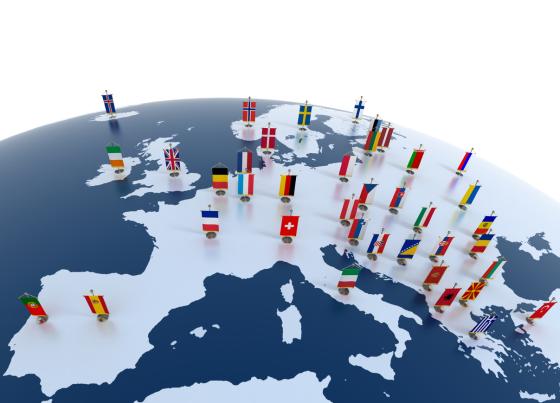
But what is the situation beyond Norway? Evanthia Kalpazidou Schmidt and Anna Vigsø Pedersen, both researchers at Aarhus University, have investigated how Gender Equality Plans (GEPs) have been followed up at nine universities across Europe.
“One of the biggest challenges we found was organising the equality work and putting the plans into action,” she writes in an email.
“Plans often look good on paper, but many struggle to follow up in real life.”

Shortage of experts and funds
Schmidt points to reasons such as lack of support and commitment from management and a lack of understanding as to why this work is important for ensuring high-quality research.
A common problem is that the institutions do not allocate resources to gender equality work, and in some countries this also includes expertise and capacity, according to Schmidt.
“Many universities simply do not allocate enough funding or create positions for people with expertise in gender equality in order to implement the plans effectively.”
“This shows that the issue is still largely ignored in a number of universities,” she states.
Often, this work falls to part-time employees or volunteer committees who do this alongside their regular jobs, she adds.
Striking national differences
The study also shows vast differences in how universities address the issue of gender equality. National legislation, culture and institutional frameworks all come into play.
“The amount of funding universities receive from the national government, the strength of the laws, the amount of resources available and how society views issues of gender and gender equality work – all of this affects the degree to which the institutions prioritise the work and how far they actually get,” explains Schmidt.
In some countries, such as Austria, Norway, Germany and France, this work is firmly on the political agenda. They have a clear legal framework for gender equality, states the researcher. In Serbia and Belgium, on the other hand, there are fewer requirements and fewer resources to work with.
Different tools
Another difference is the mechanisms used by universities in the nine countries included in the study.
In countries like Germany, Belgium, Norway and Italy, moderate gender quotas are used for management, but not in Denmark, Serbia or the UK.
Italy stands out as the only country to use gender budgeting in higher education, while the UK is unique with its accreditation scheme, the Athena SWAN Charter. In this scheme, institutions may apply for accreditation at various levels, based on how much they have achieved in terms of gender equality work.
Austria has gone the furthest in its recruitment efforts:
“There, the shortlists for new positions must be gender balanced, ensuring more equal opportunities for both genders,” explains Schmidt.
More international cooperation proposed
The nine universities included in the study were part of the same university alliance: Circle U.
“You mention that cooperation between universities can improve gender equality efforts. How?”
“When universities work together, they can share experiences, tools and good solutions – and learn from each other's mistakes. By partnering, they can create synergies and provide access to a shared knowledge base,” reflects Schmidt.
According to Schmidt, having experienced institutions provide support for those starting the journey can help save time as well as resources.
“The University of Oslo and the University of Vienna, both with extensive experience in gender equality work, can act as mentors for universities with less experience and expertise.
“This kind of peer learning helps to build community across national borders,” says Schmidt.
At the same time, there is no need to reinvent the wheel:
“Universities can conduct joint management and staff training, share toolkits and show how ideas and strategies can be translated into everyday practice so that others don't have to start from scratch.”

EU requirements a pretence of equality for Norway
A Norwegian study shows a clear difference between requirements and practice. Together with colleague professor emerita Ingrid Guldvik, Tonje Lauritzen reviewed 60 action plans for gender equality and diversity from 10 universities, 18 university colleges and 32 research institutes in Norway.
“There is neither stick nor carrot in this action plan-based work,” says sociologist Lauritzen, former researcher at Eastern Norway Research Institute.
This was the conclusion of the Norwegian study Lauritzen and Guldvik conducted last year on the GEPs work.
Lauritzen points out that these institutions are required to have such an action plan to be eligible for research funding from the EU and the Research Council of Norway.
“However, as of now, no attention is given to what the action plans should contain, or to any follow-up of measures from the EU,” she notes.
The EU has several specific requirements for what the action plans should contain. These include earmarked resources for gender equality work, support for training and skills development, and information on current status and how the work will be followed up.
The EU is moving towards a broader equality perspective in which ethnicity and disability are also discussed. At the same time, the requirements for the action plans still only apply to gender, Lauritzen emphasises. In practice, however, it is not always so clear-cut:
“The requirements are good, but they don't necessarily create change,” states Lauritzen.
“We've seen that the work on equality has become bureaucratic, almost giving a pretence of equality. It’s a bit like, ‘We have an action plan, so we’re good to go.’”
At the same time, Lauritzen is quick to point out that the study only analyses the action plans themselves, and therefore cannot say anything about how the equality work in the institutions actually works in practice.
Huge variation in local needs
A key finding is that the action plans are often general and rather vague, failing to clearly state how they will be followed up at faculty and department level.
“The plans often state that ‘we will increase the proportion of women among professors.’ But when this is passed on to faculties, departments and academic communities, it becomes unclear who is actually supposed to act on it,” says Lauritzen.
She points out that the challenges often vary considerably within the same institution.
“One faculty may already have 70 per cent female professors, while another has hardly any.
“This requires differentiated measures,” says Lauritzen.
Recently, we interviewed the authors of an article on how four universities in Norway work to address gender equality and diversity. They found three patterns (news article in Norwegian).
Proposing action plans at faculty level
Lauritzen believes that faculties should draw up their own action plans, depending on their individual circumstances. This may already be happening at some institutions, particularly large universities, but far from everywhere.
“It could be beneficial to have one overall plan at institution level, linked to a strategy, like for instance: ‘This is important for us as a university or university college,’” suggests Lauritzen and adds:
“On the basis of this action plan, the institution management could require each faculty to draw up their own action plans in which they describe their current status, the challenges they face, and what they will do specifically to address each area in the institution's action plan.”
Lauritzen notes that this would require the institution management to be very clear on what their areas of priority are. It is also important that they set aside and allocate resources so that the faculties are able to implement measures and follow up on developments, she adds.
Everyone agrees – nothing happens
According to Lauritzen, many equality plans do not require much commitment.
“Many action plans are very ‘safe’ and easy to agree with. They refer to ideals of fairness and benefit. In fact, only three out of sixty action plans highlight the need to prioritise.”
“You write that the plans are consensus-orientated, for example by arguing that ‘equality is fair.’ Could it also be a strategic move that the plans are generalised to ensure broad support?”
“It could be deliberate, but I don't really think so. I think it is more about how gender equality work has developed. It has become part of the bureaucracy. You have to follow the law, report, and make plans. And few would disagree that equality is fair,” she says.
Toothless consensus
Lauritzen finds it advantageous that gender equality has become an integral aim in the academic system and bureaucracy. However, she feels that something has been lost along the way.
“There is less political will, fewer clear priorities and less concrete action. Gender equality has become an administrative project, something to be reported on and planned for, rather than a political cause for which to fight.”
She is clear that the work cannot simply be left to individuals or good intentions.
“The management must clearly state ‘this is what we want, this should be prioritised,’ and follow this up with funding, time and reallocation of resources. Without that, gender equality becomes reduced to a mere task among many others,” Lauritzen says.
Translated by Totaltekst.
The article “Beyond Policy: The Odyssey of Implementing GEPs in European Academia” (2025) is written by Evanthia Kalpazidou Schmidt and Anna Vigsø Pedersen and published in Social Inclusion.
They examine how nine European universities develop and implement Gender Equality Plans (GEPs).
According to the study, this work looks vastly different in the various countries. This is due for instance to differences in resources and the fact that universities have different national and institutional frameworks.
Methodologically, the study is based on analyses of documents including all the universities' GEPs.
In addition, they conducted 26 semi-structured interviews with coordinators and managers working on the action plans.
The article “Gender Mainstreaming in Academia: Flowing Between Policy and Bureaucracy” (2025) is written by Tonje Lauritzen and Ingrid Guldvik and published in NORA – Nordic Journal of Feminist and Gender Research.
In it, they examine how gender mainstreaming works as both a strategy and a practical instrument in the university and research sector.
Their study includes 60 action plans for gender equality and diversity from 10 universities, 18 university colleges and 32 research institutes in Norway. These were accessed in the last quarter of 2023.
They find that arguments on which there is broad consensus – fairness, legal requirements and benefit – dominate, while more contentious priorities related to power and resource distribution are rarely mentioned.
Read more news articles on Kifinfo about action plans (GEPs)