Norway doubles down on equality work amidst global pressure to relent
It is more important now than ever to promote equality, diversity and integration, according to Eileen Fugelsnes from the Ministry of Education and Research, and the Ministry has appointed a new committee for gender balance and diversity in research.


Now history, 2025 was a year in which gender equality, diversity and inclusion in research received an extraordinary amount of attention.
In Norway this trio of issues is often referred to as LIM (likestilling, inkludering and mangfold – meaning equality, inclusion and diversity), and as it happened, some US presidential executive orders at the very beginning of last year led to EDI (or DEI) – also equity, diversity and inclusion – being placed squarely on the agenda.
2025: a difficult, but also strengthening year
Though last year was a year of attacks on diversity in academia, it was also one in which many spoke out on the importance of protecting diversity and minorities as a research field, and in defence of research. For instance, Curt Rice, former chair of the Committee for Gender Balance and Diversity in Research (KIF), now director of Fulbright Norway, was strongly opposed to US interference in the researcher exchange between the United States and Norway.
On the bright side, the European Commission launched the “Choose Europe” package to attract US researchers to come to Norway, and the Research Council of Norway did something similar. For the first time, the European gender balance statistics, “She Figures”, feature intersectionality and inclusion as well as an overview of gender and pay in research.
For the first time in Norway, a networking event was organised for minority researchers, a new course is being developed in diversity management and the Research Council of Norway has announced 30 million kroner in funding grants for gender equality and diversity in research.
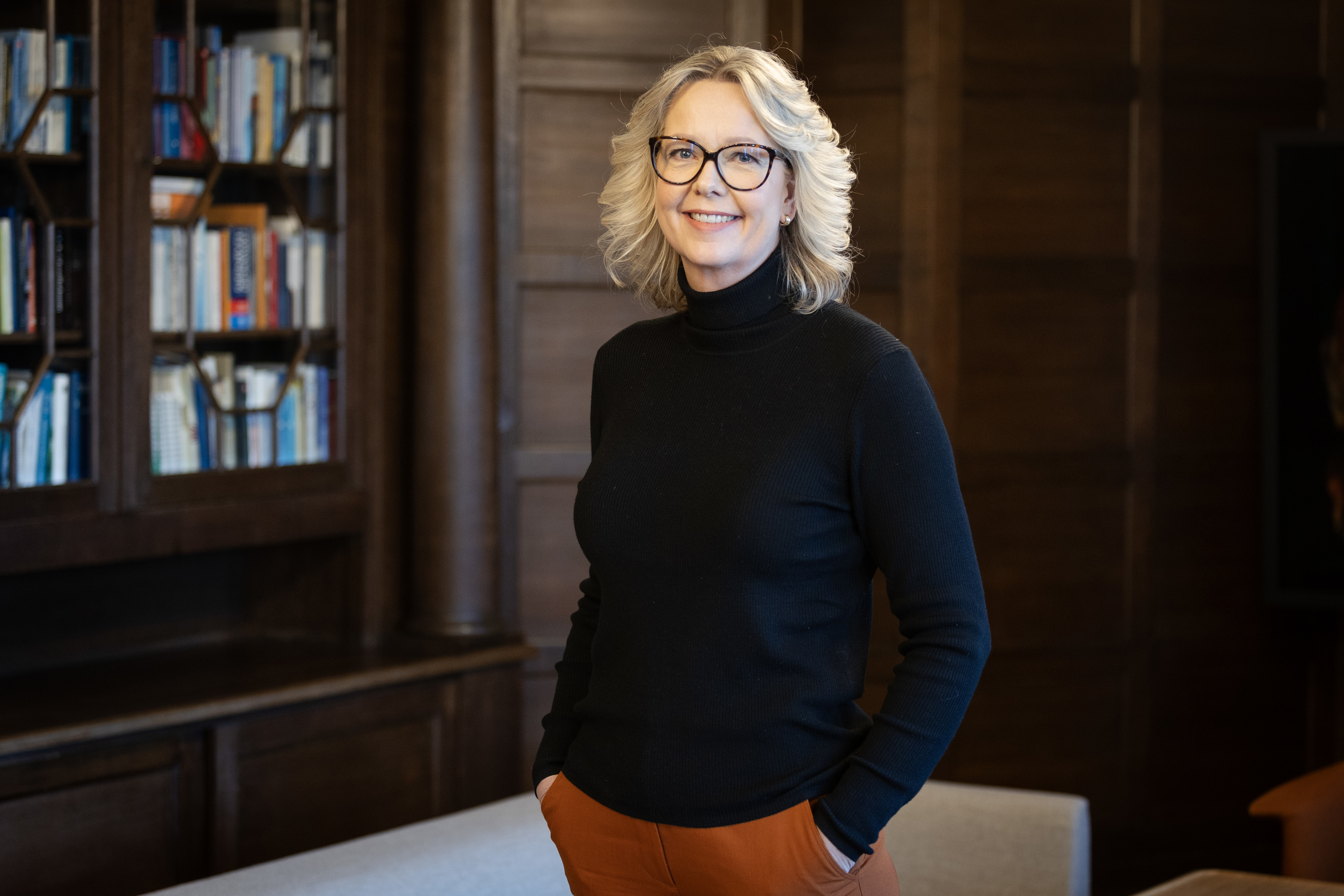
New KIF: Important values
With regard to KIF, the Progress Party has previously stated on the research news site Khrono that they want to cut support and eventually “phase out support” for the committee entirely. When this criticism was levelled, it was countered by Universities Norway, the Young Academy of Norway and KIF chair Ragnhild Hennum, among others.
The Ministry of Education and Research has recently appointed a new committee for the period of 2026 through 2029.
“What is the Minister's view on the criticism to stop spending money on what some believe to be an unnecessary committee for gender equality?”
“We have just appointed a new committee. Equality, diversity and integration are values we have fought for a long time to promote, and they are still important to focus on,” writes Eileen Fugelsnes, State Secretary to the Minister of Research and Higher Education, in an email.
She adds:
“Gender equality, diversity and integration in academia and education are now under attack in many parts of the world, making our work even more important.”
KIF organised a conference in November, where the old committee was dissolved and the new one presented by Minister of Research and Higher Education Sigrun Aasland. The Ministry then issued a press release about the new leadership, members and mandate.
“Many considerations when appointing such a committee”
The new KIF that started this year has shrunk somewhat in size, but has been given an expanded mandate; both of these changes were decisions made by Ministry of Education and Research.
“Why has KIF been reduced from 12 to 10 members, while at the same time its mandate and work areas have increased?”
“The new committee has an additional representative appointed from the institute sector beyond what the mandate requires. Other organisations are represented by the number specified in the mandate,” replies Fugelsnes.
“Even with the expansion of the committee's mandate, a larger committee would not necessarily have worked better," she continues.
“There are two members in the new KIF who are also in the current committee. What are the Minister's views on continuity and renewal when it comes to KIF members?”
“When appointing such a committee, there are many considerations to be made. The mandate requires representation from the various organisations, and the balance between women and men is a statutory consideration. In addition, we take into account geography, ethnic background, professional background and a certain balance between continuity and renewal,” replies Fugelsnes.
“To ensure different perspectives on the committee’s work, it is important to have a broad-based committee. In addition, the committee has a well-qualified secretariat that helps ensure the continuity of the work.”
An independent committee
The mandate clearly states that “KIF is professionally independent.” Fugelsnes emphasises that it is KIF itself that decides how it wants to work.
Fugelsnes goes on to comment on KIF's prerogative to prioritise within certain constraints:
“The mandate sets out some guidelines on what the committee should work on in particular, both within education and research. Within the framework of its mandate, the committee has the freedom to prioritise its work as it sees fit."
In April last year, KIF Committee sent a letter to the Ministry to emphasise how important they believe it is that the mandate establishes the committee's autonomy.
In its letter, the committee also wrote that if the mandate is expanded to include educational choices, this must be followed up with increased funding.
Students as important as researchers
Since its inception, KIF’s mandate has been constantly evolving and expanded over the years to include more issues, such as ethnic diversity and social background. In line with its mandate from the Ministry of Education and Research, KIF Committee shall continue to raise awareness on diversity, inclusion and harassment.
In the coming period, the committee shall also help increase knowledge on how gender and social and ethnic backgrounds affect everything from the path into research to top positions and management jobs.
A recent change from 2026 is that the committee will have an equally strong focus on students. The mandate emphasises the importance of knowledge on how gender and social and ethnic background also affect educational choices among students.
When asked about the basis for including students in the KIF mandate and how the new committee will prioritise the various issues and groups in the mandate, the State Secretary explains that they want a less gender-segregated labour market.
She elaborates:
“Then we need to start with education. There are many professions requiring more people, and we believe that the staff in various professions should reflect the entire population and ensure greater diversity.
To succeed in this, the student groups must be broadly composed,” Fugelsnes states.
Translated by Totaltekst.
The first KIF Committee was established in 2004. The seventh successive committee has now been appointed, active from 2026 onward.
The new committee consists of ten members and seven deputy members, all from the university, college and institute sector.
KIF is chaired by Carl Christian Thodesen, Pro-Rector of OsloMet, and vice-chaired by Vibeke Opheim, Managing Director of the Nordic Institute for Studies in Innovation, Research and Education (NIFU).
The government proposed expanding KIF’s mandate in the white paper to the Storting titled “Professional qualifications across the country”. The Norwegian Parliament (Storting) endorsed the proposal, and this has now been followed up with a new mandate from 2026.
Extract from the mandate on what the committee shall do:
- support and give recommendations regarding measures that promote the improvement of gender balance and greater diversity among students and academic staff
- seek to raise awareness of issues related to diversity, inclusion and harassment
- knowledge about how gender, social, and ethnic background affect (1) diversity and gender distribution in educational choices among students in higher education, and (2) critical transitions in a research career; from entry into research to top-level and leadership positions
- see Norwegian conditions in an international context
- be a driving force in international efforts on gender balance and diversity
Read the press release from the Ministry of Education and Research and read more about KIF on our website
The KIF secretariat was previously with Universities Norway (UHR). From 1 July 2025, the Ministry of Education and Research transferred the secretariat from UHR to the Norwegian Directorate for Higher Education and Skills (HK-dir).
The secretariat consists of Ella Ghosh, Linda Lien and Marit Ubbe: KIF and Kifinfo
On the role of the secretariat, KIF writes to the Ministry of Education and Research “that an expanded mandate must be followed up with a strengthening of the secretariat and increased funding.” The committee also emphasises that the secretariat plays a key role in the committee's work.