Podcast: A threat to academic freedom is a threat to women’s rights
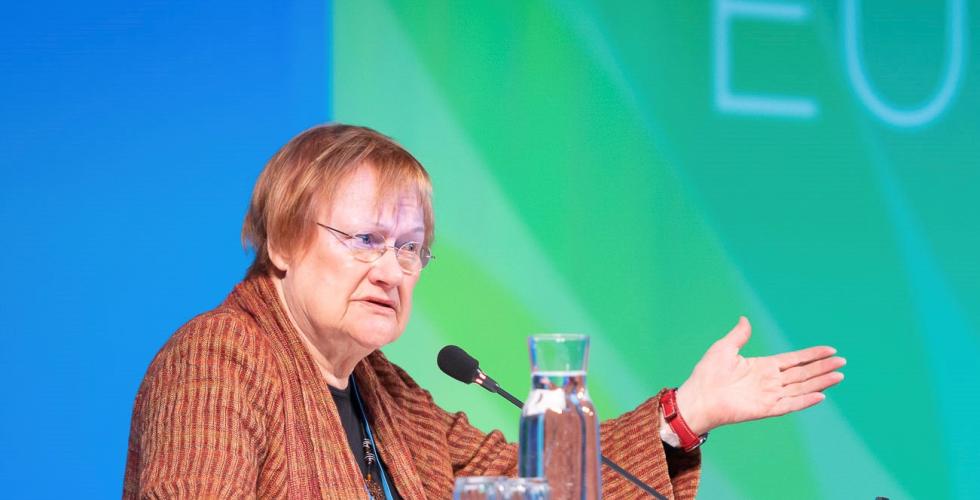
Academic freedom is threatened by authoritarian right-wing populism in countries in Europe and Latin America. Listen to a podcast discussing why this matters to women's rights.
Values like equality, inclusion and diversity are being stifled by the prevailing management ideology in academia, critics note. “We must create an academic culture of compassion,” says British organizational psychologist Kathryn Waddington.
Men produce twice as many scientific publications as women. At least that’s the long-held assumption. But Lynn Nygaard, a special adviser and doctoral research fellow at PRIO, challenges this widespread belief in her recent article.
We have asked stakeholders in the sector about the status of research on sexual harassment in Nordic academia in the wake of #MeToo.
Academia lacks gender balance when it comes to salary, academic level and subject area. Experts are calling for stronger measures to achieve gender balance.
The KIF Committee believes that gender balance and ethnic diversity are crucial to finding good solutions to major societal challenges.
Gender equality generates better results within research and innovation. In addition, EU bureaucrats argue that European research funding should be earmarked with specific requirements for gender perspectives.
In recent years some have asked whether the ceiling has been reached for the number of foreigners in Norwegian academia. The Young Academy of Norway would rather have a debate on how to best take advantage of this new diversity.
Round after round of temporary hiring and a non-stop pursuit of excellence and funding may impair progress towards gender equality in academia, according to research conducted at the University of Oslo.
The results of the national survey on bullying and harassment in Norway’s higher education sector are finally in. But the reasons why harassment occurs remain unclear, according to the Committee for Gender Balance and Diversity in Research.
“The use of gender points is not just about lifting people over a point threshold they would not otherwise reach. It is also about sending a signal that women and men are both wanted in the programme,” says Research Director Liza Reisel.
With the climate crisis as backdrop, university employees have demanded a reduction in air travel. Could cutting air travel also lead to greater gender equality?
Sexual harassment, the #MeToo movement, a radical suggestion to improve the gender balance among Nobel candidates, and the problem with white campuses. Read our top ten news articles from 2018.
Implicit bias – the presence of prejudices and stereotypes in the workplace – has been a topic of discussion both within and outside academia. Does this lead to a focus on the individual that masks embedded structures inhibiting gender equality?