Men get most out of research stays abroad
Women move abroad less often, and when they do, they gain less from it than male researchers, according to a new study.
We have to be good teachers, good researchers and good at administrative work. This means we are doomed to fail, according to the editors of a book about women and failure in academia.
Declining interest in STEM subjects and lower achievement should prompt action, according to Guro Rørvik, head of the National Centre for STEM Recruitment.
Research is built on the core values of openness, trust and international collaboration. Security, by contrast, is about protecting national interests, chains of command and compliance, says Silje A. Hole of the Institute for Energy Technology.
Researchers have studied how countries in Europe prevent violence and harassment in academia. Perhaps surprisingly: Norway doesn’t come out of it particularly well.
How can universities strengthen Norwegian as an academic language and remain attractive workplaces for international researchers? Language researcher Verónica Pájaro believes it is important to give researchers time to learn Norwegian.
While the idea to establish a gender equality network within the European Research Area (ERA) emerged back in 2004, GENDER-NET was finally launched in 2013 as the first ERA-NET on the topic of gender equality and the gender dimension in research.
The Norwegian Government has recommended consolidating the Gender Equality Act and three anti-discrimination laws into a joint anti-discrimination act. According to the KIF Committee, there are several reasons why this is not an ideal proposal.
She is future oriented in her work to bring diversity and change to the IT field, but Oda Award winner Beathe Due thinks it is just as important to be aware of the past when working for change. “It’s worth remembering that information technology has not always been a man’s field,” says Due.
Expectations were high for the incentive scheme from the Ministry of Education and Research to recruit women to senior-level positions in mathematics, natural science and technology. Now, however, an evaluation report recommends ending the scheme.
“The award is for universities, university colleges and research institutes seeking to move up a notch or two in the gender equality ranks,” says Gerd Bjørhovde, chair of the Committee for Gender Balance in Research.
Students want gender balance in their academic fields, and feel they benefit academically from a combination of women and men. However, persistent stereotypes may be an obstacle to the long-sought-after gender balance.
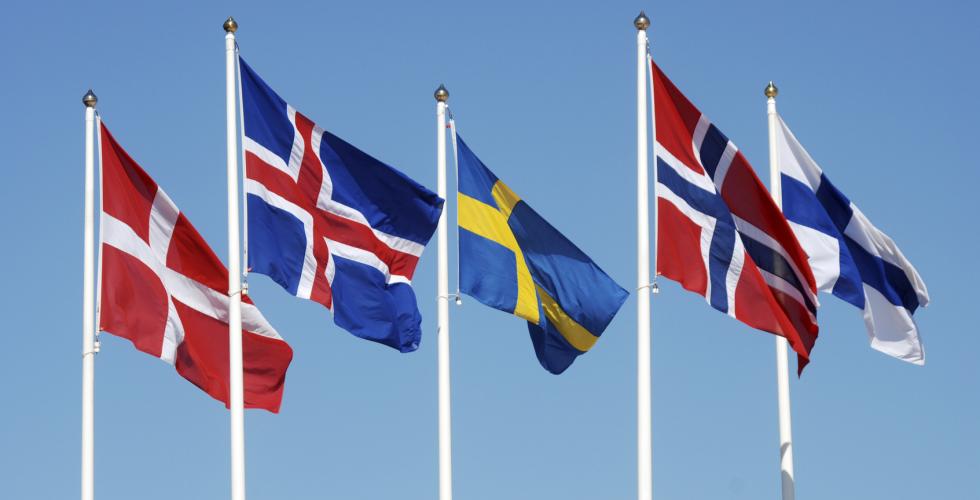
Although the Nordic countries have been good about bringing more women into academic leadership positions, they are only at the EU level when it comes to the percentage of female professors.
The new white paper on research describes the lack of gender balance in the research sector, but its only recommendation for dealing with the problem is to ask the KIF Committee for advice. The ministry will get what it asks for.