The authors of a new book feel let down by academia
We have to be good teachers, good researchers and good at administrative work. This means we are doomed to fail, according to the editors of a book about women and failure in academia.

“You need to be prepared for this. Because it happens to all of us,” says Marina Cano.
She is co-editor of a new anthology about women and failure in academia. Co-editor Rosa García-Periago also joins us via Teams.
“I would say that the book was born out of our own failures,” says Cano, Assistant Professor of English Literature at the University of Valencia.
For Cano, one of the issues was not securing a permanent position in academia. But her experience is far from unique:
“There’s a lot of failure in academia right now. We are expected to be good teachers, good researchers and good at administrative work. We have to be perfect at absolutely everything,” says García-Periago, Senior Lecturer at the University of Murcia.
“In a situation like that, we’re almost bound to fail,” she says.
Academic – and influencer?
The editors criticise what they describe as the neoliberal university, i.e. universities that, according to them, operate as commercial businesses, like Amazon or Google. They are characterised by a culture in which everything has to be measured and reported, and in which profitability takes precedence over everything else.
“Universities are functioning more and more like businesses,” says García-Periago.
And they believe the demands are only increasing.
“You have to publish, conduct research, teach and do all the administrative work,” says Cano.
You need to be active across all possible channels:
“Many researchers do podcasts, build social media profiles or send out their own newsletters on platforms such as Substack. You're almost expected to be an influencer as well as an academic.”
A hundred applications for one job
The neo-liberal universities are churning out new PhD candidates, but without a plan for what will happen to them when they’re finished, according to the researchers from the two Spanish universities.
“It’s often said that universities also train doctoral candidates for the wider labour market. What are your thoughts on that, can it also be positive?”
“That question is somewhat outside the scope of the book. We won't really go into that discussion.”
Cano refers to a friend who is an associate professor in the humanities.
“She told me that she doesn't really want to supervise PhD students, even though she does, because many of them embark on a PhD in the hope of building a future in academia.”
“But the truth is that when the students complete their doctorates, there probably won't be jobs for them.”
She describes a labour market that is tougher than ever.
“Today, especially in countries like the US and the UK, a hundred or two hundred applicants apply for one permanent position,” says Cano.
She does a simple equation:
“If you have one job and a hundred applicants, that means in practice that 99 people are going to fail.”
Received 50 submissions
The process behind the anthology reflects the broader situation in academia: the editors received 50 chapter submissions.
“In the end, we ended up with ten chapters, two of which we had commissioned.”
The aim was to cover many aspects of failure in academia, such as motherhood and various minority experiences. However, there were some recurring topics among the submissions.
“We noticed that we received a lot of submissions about precarious working conditions in academia, such as temporary contracts and the lack of permanent positions.”
“Failure is political”
The main argument in the book is that the problems are not individual. It is not simply a matter of individuals falling short.
“Failure is political,” García-Periago insists, referring to how academic power structures, competition and inequality make some groups far more likely to ‘fail’ than others.
According to the editors, talking about failure highlights who and what is valued in academia. And who gets pushed out.
Cano gives an example:
“If I don’t manage to produce all the publications the university expects of me, then on one level I’ve failed. But at the same time, this failure also highlights how unfair or destructive the system can be.”
In the anthology, the authors turn the problem on its head. García-Periago refers to one of the chapters in the book written by literary scholar Theadora Jean:
“She writes: “I didn’t fail. Academia failed me”.
“Failure is a privilege”
In the introduction, the editors write that “failure is a privilege”.
“What do you mean by that?”
“For some groups, it’s easier to accept failure and turn it into something positive,” says Cano.
Just being able to reflect on failure is a luxury in itself, according to them.
“People who are struggling financially and professionally often don’t have the time or space to sit and think about failure in the way we’ve done,” says Cano, who adds that at times she has had to rely on family and friends to focus on her academic projects.
García-Periago points out that the risk of failure is unevenly distributed:
“Men are more likely to fail ‘upwards’, while women often fail ‘downwards’. So it's easier for men to bounce back after a setback. Women are more likely to feel that a setback has greater consequences for their career or status.”
Most at risk
Another way in which academic failure is political is through power imbalances, according to Cano and García-Periago: Who enjoys job security and exercises influence? Who is vulnerable?
“If you compare the situation of a rector or dean with that of a temporary academic employee, the difference is enormous,” says Cano.
In particular, she points to part-time employees and newly graduated PhD candidates who have to take on the assignments they are given.
“They obviously run a greater risk of ‘failing’.”
Academia is full of hierarchies, according to the editors. Cano, who has worked in Norway, says she was told that Norwegian academia was less hierarchical than in many other countries. Still, she argues that unequal power relations are a feature of universities worldwide.
“This also means that the risk of failure is unevenly distributed.”
Norwegian (junior) researchers under pressure
“The authors point to a pressure that many young researchers in Norway will recognise.”
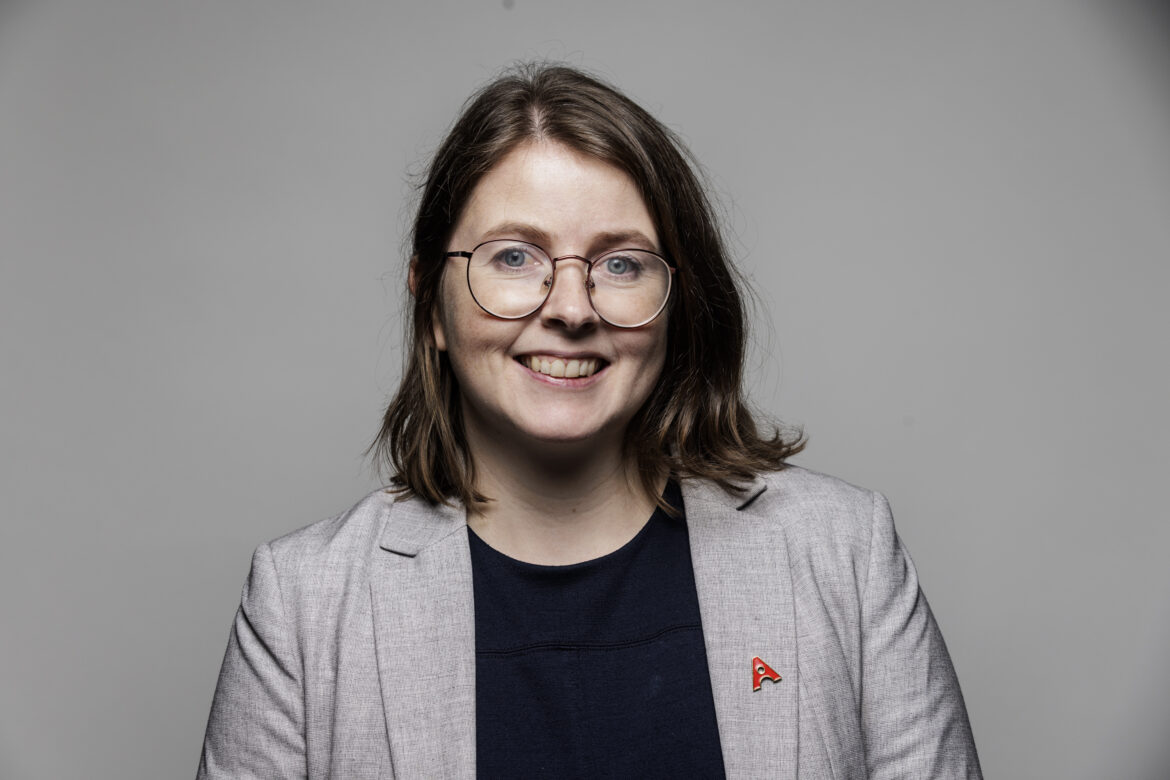
This is the conclusion of Marte E. S. Haaland, head of the Young Academy of Norway (AYF), a network for cooperation and exchange of experience among young researchers in Norway.
“Research funding is being cut, many are facing heavier workloads and the number of positions is shrinking. This leads to greater competition, more uncertainty and poorer conditions for success.”
Haaland believes that Norway’s situation is still different from that of several of the countries looked at in the book.
“But we still have to take targeted action to ensure we don’t move in the same direction as those countries, and that is a political responsibility,” she says.
About more than gender
The title of the book points especially to women in academia. According to the editors, women often have to balance research with caregiving duties. They also do more of what they describe as academic housework.
“How does failure relate to other social categories, such as ethnicity and social background?”
“Our collection focuses on women. But it's no coincidence that many of our contributors identify not only as women, but also as black or minority women,” says García-Periago.
One of the chapters in the book also deals with so-called trans experiences in academia.
García-Periago argues that academic failure is also about which groups have traditionally held the least power, which, she points out, is reflected in the statistics:
“For example, EU data show that only around 30 per cent of those who reach professor level are women. And very few of them are black women.”
Too personal
According to the editors, the book is deeply personal. Several of the contributors use autoethnography and write specifically about their own experiences.
“We are academics writing about academia. Some authors adopt a personal approach, others a more theoretical one, and many combine both,” says Marina Cano.
Rosa García-Periago says that her planned chapter on motherhood in academia became too heavy a cross to bear:
“It was too personal. Way too personal. I couldn’t write about it.”
“So in a way, that is my greatest failure.”
Translated by Totaltekst.
Marina Cano and Rosa García-Periago are the editors of “Women, 'Failure' and Academia: Activism, Creativity and Critique in the Contemporary University”. The book is available as an open access publication through Bloomsbury Publishing.
It argues that academic failures are political. The contributions show how seemingly personal failures related to having a ‘successful’ academic career (permanent position, research funding, publications etc.) must also be understood in light of institutional issues and social inequality.
The researchers say that the book is aimed at everyone who works in academia, especially women and people who identify as women.