No winners in whistleblowing cases
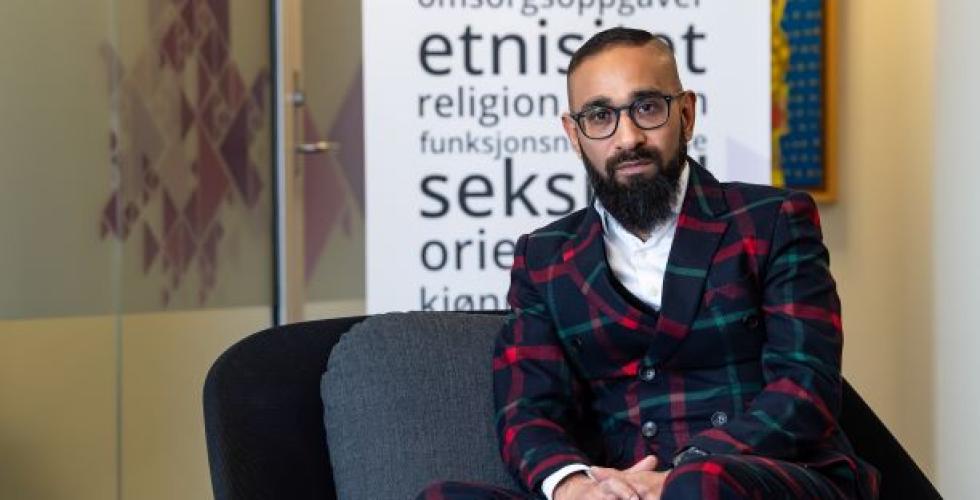
“We succeed if I don’t receive any whistleblowing cases – not because they’re swept under the carpet, but because unwanted incidents simply don’t happen,” says Kristian Solaas, Equality Advisor at the University of Agder.


Equality Advisor Kristian Solaas works to prevent whistleblowing cases from arising. Nevertheless, figures show that unacceptable behaviour still affects thousands of employees in the higher education sector.
Working environment surveys (ARK), which map well-being, working conditions and collaboration at universities and university colleges, have in recent years documented cases of bullying, harassment and discrimination. However, there is still no up-to-date national picture of how widespread the issue is in the sector, and the only nationwide survey dates back to 2019. (See the fact box.)
Every university and university college is required to have systems in place to handle censurable conditions in Norway – but how do they work in practice? And why is there still such a large gap between what is said in surveys and what is actually reported through formal channels?
Taking steps to pre-empt whistleblowing
“It is important to prevent unwanted incidents. When a case makes it to my desk, there are no winners,” says Kristian Solaas from the University of Agder (UiA).
Both parties, the person reporting the matter and the person being reported, are placed in an emotionally challenging situation, regardless of the case’s outcome, according to Solaas.
“Ideally, we succeed if I never receive a whistleblowing case – not because they’re swept under the carpet, but because they didn’t happen in the first place. The goal is to prevent incidents before they occur,” he adds.
Solaas is an equality advisor at the UiA, a position he has held since the end of the pandemic in November 2020. He was soon assigned responsibility for mapping the working environment at the university.
“We have a clear procedure to resolve cases at the lowest possible level. This means that if employees experience anything censurable, they should contact their immediate superior. Don’t wait, talk to them at once,” he says.
“The longer you wait to speak up, the more challenging it may become,” says Solaas.
Solaas is one of three employees from the Human Resources department on the notification council. On behalf of the Director of Human Resources, the group receives and assesses all reports and notifications concerning potential censurable conditions from employees. Notifications can be submitted anonymously, and they may come from external sources, such as a guest lecturer.
“UiA also has its own student notification council, and in cases involving both staff and students, the two councils coordinate their efforts,” he says.
Solaas stresses that efforts to improve the working environment are also an integral part of equality work.
“The notification system is always there should something happen. But promoting gender equality, inclusion and diversity also improves the working environment and helps to prevent discrimination and harassment.”
When an incident is perceived as censurable and someone reports the matter, the notification council determines whether it constitutes a complaint or a case of censurable conditions, Solaas explains. The council also decides who should handle it.
Are we talking conflict or notification?
There are no formal requirements for how a matter should be reported. It can be done in writing or verbally, by phone, email, letter, through an online form or in person, according to the Norwegian Labour Inspection Authority.
The notification system at UiA was developed following the national survey that took place in 2019. The university has its own guidelines for how reports of censurable conditions should be followed up. This varies depending on the severity, what has happened and the type of incident concerned. (Read more in the fact box.)
“What type of cases, and how many, are we talking about at UiA?”
“In 2024, the notification council reported handling nine cases. Four cases of harassment, three of bullying, one sexual harassment case and one discrimination case,” says Solaas.
“When a matter is reported in the notification system, the council discusses it, to determine whether it is an actual notification, or, for example, just a conflict.”
If it’s a conflict, it is forwarded within the system to the appropriate person, such as a manager or someone in the faculty administration, he explains.
“What is the time limit for reporting a matter?”
“When it comes to cases concerning staff, they typically report it only after the situation has escalated. The person concerned often reaches a point where they feel ‘I can’t take this anymore’,” Solaas explains.
“We deal with cases about incidents four to five years back in time. It may be that circumstances make reporting difficult, or that the incident needs time to be thought through.
It can take time for people to report a matter, but once they do, it’s usually because the situation has escalated.”
Lacking a digital notification system
Unlike UiA, which has a digital notification system, UiT The Arctic University of Norway still lacks a digital solution. Although UiT updated its procedures and guidelines for notification cases in 2022, it has not implemented a system comparable to the solution used by most other universities and university colleges in Norway.
“We have still not acquired a module for handling notifications. The Norwegian University of Science and Technology and Oslo Metropolitan University use a system that we will be looking into,” says Jan Ove Mortensen, Head of the Organizational and HR Development Section at UiT.
“So how do you receive notifications?”
“Our procedures allow reports to be made either openly or anonymously, but following up anonymous reports is more challenging,” Mortensen admits.
“There are no formal requirements for how we receive notifications, but we prefer to receive them in writing.”
Matters can be reported to a manager or another staff member, and the recipient is responsible for recording the name of the person reporting the matter and forwarding the case for follow-up, Mortensen explains.
Like UiA, UiT's main principle is that notifications should be handled at the lowest possible level. The university’s website states who the matter can be reported to, but Mortensen says that they can choose who they want to contact.
“What type of cases, and how many, were reported in 2024/2025?”
“In 2025, 35 cases of censurable conditions were reported at UiT. Censurable conditions were identified in nine of the cases, while five are still being processed.”*
Harassment, discrimination and inappropriate managerial behaviour are recurring themes in the reports, Mortensen explains.
“Of the 20 cases involving discrimination and harassment, censurable conditions were identified in seven instances.”
The results from the ARK survey at UiT for 2024–2025 confirm that discrimination and harassment are the most common forms of unacceptable behaviour, Mortensen reports.
Is it possible to report a matter anonymously?
That’s fully possible at UiA, Solaas notes. At the same time, he points out, like Mortensen, that handling anonymous reports is often more challenging.
“We don’t have any dialogue with the person reporting the matter, so the person being reported doesn’t receive a specific description of the incidents they can respond to properly,” says Solaas.
Although employers are not obliged to facilitate anonymous reporting, many choose to do so anyway. Since UiT’s reporting system is email-based, remaining anonymous may be particularly challenging.
“How can someone report anonymously when there is no digital system in place?”
“You could get someone else to report a matter on your behalf, or, for example, create an anonymous email account,” Mortensen explains.
“Why do you think it’s important to facilitate anonymous reporting?”
“When employees or students have the opportunity to report a matter anonymously, more people are likely to report censurable conditions,” says Mortensen.
NTNU Social Research also stresses the importance of being able to report anonymously, even though it can make follow-up more difficult.
“In general, we receive very few anonymous reports. Our procedures allow for anonymous reporting, but it is widely recognised that transparency ensures a smoother process and a better outcome for all parties involved,” writes CEO Roger Lian in an email.
“Facilitating anonymous reporting can nevertheless lower the threshold for speaking up. Employees should feel that the process is safe and that cases are handled professionally and responsibly for all the parties involved,” he says.
Many people don’t know how to report a matter
Figures from the 2024 ARK survey show that 8 per cent, i.e. around 2,000 employees, have experienced unacceptable behaviour. However, less than half of them reported the incident(s) to the institution.
At UiA, 101 employees experienced unacceptable behaviour, but only 40 per cent reported it, according to Khrono. Solaas confirms that only a small number of cases are reported each year.
“Why do you think that is?”
“I think it’s because employees either don’t have the energy to become involved in a ‘case’, or they feel the matter isn’t serious enough to warrant reporting,” he says.
“They might also fear the consequences for their own situation or career. You don’t want to be labelled a troublemaker,” he goes on to say, adding that not enough is known about the underlying reasons.
In a previous article on Kifinfo, Senior Advisor at the Equality and Anti-Discrimination Ombud Margrethe Søbstad confirmed that there is a mismatch between what people say in surveys, like ARK, and the cases submitted in internal notification systems or to the Anti-Discrimination Tribunal.
The national survey from 2019 showed that fewer than half of respondents nationwide were aware of notification procedures. ARK’s overview report 2023–2025 shows that almost half of those who stated that they had experienced unacceptable behaviour did not actually report it.
“What are you doing to reach those who don’t report or don’t feel able to speak up?”
“This is where UiA differs from other institutions. Since the digital notification system was established in 2019, all new employees have been informed about it,” says Solaas.
Solaas explains that new employees also receive information about the notification system and the guidelines for handling reports of censurable conditions as part of their onboarding, including topics such as unwanted sexual attention. They also held a course last year to train case officers and managers on handling these cases, and hold regular information meetings.

Gølin Larsen works as an equality advisor at UiT and, like Solaas, is focused on building competence and preventive work.
“We are working to simplify our notification procedures,” says Larsen.
Further developing our notification procedures and channels is one of the measures in UiT’s action plan for equality, diversity and inclusion. The goal is for all staff and students to be familiar with the channels, she explains, adding that training leaders, employees and safety delegates in prevention is important.
“We have previously held courses on fostering a healthy working environment, including the prevention of discrimination, harassment and sexual harassment at all our campuses, but not in the last three years. These courses will resume in autumn 2026,” says Larsen.
Zero tolerance
While the higher education sector uses the ARK survey, many in the institute sector use the AMIS working environment survey for the institute sector, according to Lian at NTNU Social Research.
“In practice, our department receives very few reports of censurable conditions. We link this to an organisational culture with a high degree of participation, openness and involvement,” he says.
Lian emphasises that NTNU Social Research has established robust procedures to ensure that notification cases are handled responsibly, confidentially and in accordance with the law.
“We have a strict zero-tolerance policy towards bullying, harassment, gender-based violence and sexual harassment.”
Like Solaas and Larsen, Lian stresses the importance of preventing unwanted incidents and notifications. He highlights the action plan for equality, diversity and inclusion as one of the key instruments in that connection.
The research institute also uses insights from working environment surveys in its preventive efforts.
“During the follow-up of a completed working environment survey, we always emphasise our notification procedures and channels. We encourage employees to report any harassment, bullying or other inappropriate behaviour they experience,” says Lian.
Lian focuses on strengthening the organisation to build trust in its systems and foster a strong reporting culture.
The importance of managers
Managers play a key role in notification cases, both because those who report cases often contact them directly, and because they are often responsible for following up cases involving staff.
“Leadership plays an important role in our sector. Managers are eager to provide close follow-up, but they have busy schedules and may not always be able to see what is happening in day-to-day work. They aren’t always on hand when an incident happens,” says Kristian Solaas.
“Among managers, there is no resistance to the topic itself; any obstacles are structural, embedded in everyday work and relate to capacity and workload,” he says.
Solaas also stresses that employees have a role in maintaining a healthy working environment and that managers cannot do it all alone. Through employee participation, staff can actively contribute, he believes.
In the research sector, many positions – such as department heads – are fixed-term appointments, which can lead to frequent turnover.
“Since many managers are on fixed-term contracts, we need to ensure continuous training for new members of staff,” Gølin Larsen says, who is also concerned with the importance of managers in whistleblowing cases.
“It's not a given that new managers have experience of dealing with notifications. So, it’s important to give them the proper support and guidance on how to manage such cases,” she says.
Translated by Totaltekst.
In this news article, Kifinfo spoke to gender equality advisors at the University of Agder and UiT The Arctic University of Norway, as well as the Head of the Organizational and HR Development Section at UiT and the CEO of NTNU Social Research.
The focus is on how reports are received and handled, the competencies required and what it takes for employees in the higher education sector to actually be aware of and use the systems.
Background:
Norway lacks regular national surveys on bullying, (sexual) harassment, and discrimination in the research sector. Numerous calls have been made for more knowledge in this area.
In 2019, the only national survey conducted to date on bullying and harassment in the sector found that 13 per cent had experienced bullying or harassment over the last 12 months.
From 2023, the higher education sector’s working environment and climate surveys (ARK) included bullying and harassment under questions addressing ‘unacceptable behaviour’. In 2025, 8 per cent of academic and administrative staff at universities and university colleges reported experiencing unacceptable behaviour in the last six months, according to the figures from the ARK survey.
A total of 25,000 employees from 25 universities and university colleges responded to the ARK survey. Two-thousand of them, or 8 per cent, report one or more instances of unacceptable behaviour.
The 2,000 employees reported a total of 2,756 experiences of unacceptable behaviour in the last six months:
- Most had experienced harassment (941 cases),
- followed by discrimination (899),
- bullying (720),
- violence and/or threats (124) and
- sexual harassment (72).
The survey’s findings underscore the importance of robust procedures and accessible notification channels. Following the 2019 survey, many higher education institutions implemented measures and notification systems to handle censurable conditions (see fact box for more).
*UiT figures: The figures are for 2024 and 2025. UiT switched case-archiving systems on 1 May 2025, and the figures were extracted from the system on that date, according to Mortensen.
In 2023, the ARK surveys for the higher education sector included questions about bullying and harassment for the first time.
Findings from the only nationwide survey:
The 2019 survey showed that 299 of the 17,984 respondents reported experiencing sexual harassment in their current workplace over the last year. Of this figure, 79 per cent were women and 21 per cent men. Younger employees are overrepresented among those who reported experiencing sexual harassment.
Twenty-six universities and university colleges initiated a joint survey of bullying and harassment in the research sector. In 2019, the first national survey of bullying and harassment in the higher education sector was presented. Read: National Report: Bullying and Harassment in the UH Sector (2019)
What constitutes censurable conditions?
By ’censurable conditions’ is meant violations of laws, ethical guidelines or generally accepted ethical norms. This can include risks to life and health, the environment, corruption, abuse of authority, unsafe working environment (such as bullying, harassment or substance abuse), sexual harassment, breaches of data protection and serious violations of internal guidelines.
Matters that only concern one’s own employment, such as dissatisfaction with salary, position or job tasks, are not considered whistleblowing under the Working Environment Act.
Sources: UiA's notification procedures and the Working Environment Act
What is the ARK survey?
- The ARK working environment survey is developed by and for the higher education sector in Norway.
- ARK is owned by the four institutions University of Oslo, University of Bergen, UiT The Arctic University of Norway and the Norwegian University of Science and Technology, which took the initiative to develop the intervention programme in 2010.
- Since its launch in 2013 to spring 2023, ARK has been used at 25 Norwegian and three Swedish institutions. Twenty-seven Norwegian institutions currently use the survey.
- In 2023, the survey included questions about perceived unacceptable behaviour.
What is the AMIS survey?
The working environment survey in the institute sector (AMIS) is organised by the Association of Norwegian Research Institutes (FFA) and carried out by each institute on agreement, with support from the consultancy firm LEAD.
AMIS was specifically designed for the institute sector and therefore also allows for comparisons with other research institutes in Norway.
Sources: LEAD, Abelia, FFA, NUPI, NTNU Social Research