Academia addresses diversity, but skirts the issue of racism
People are reluctant to talk about race and whiteness, but education and research institutions may overlook racism due to ‘not seeing skin colour’, according to associate professor Sandra Fylkesnes.

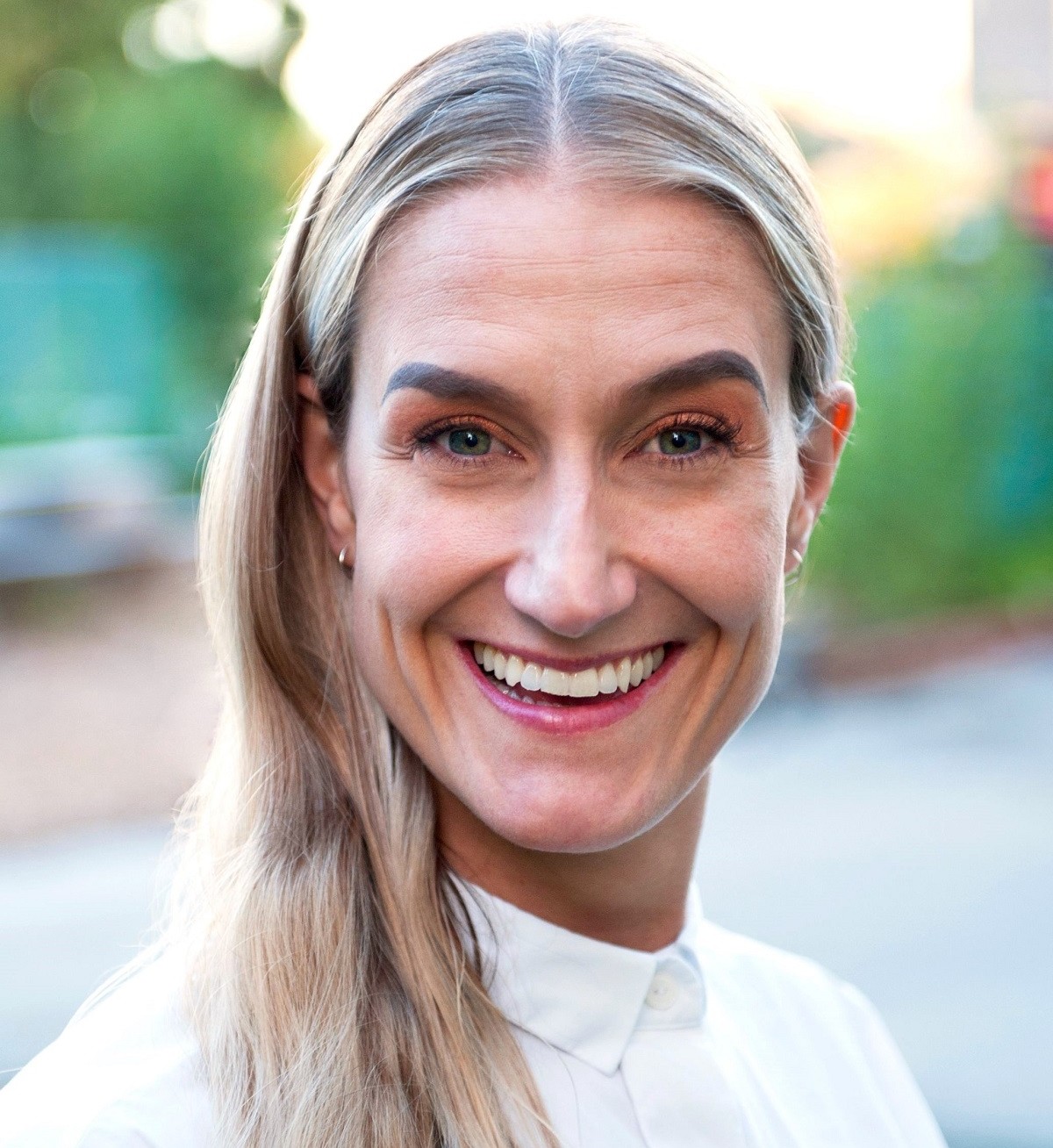
“I find that mentioning the word race makes many people uncomfortable, as if the word itself is dangerous. This is most noticeable among colleagues, not necessarily students,” says Sandra Fylkesnes, associate professor at Østfold University College.
Fylkesnes is coordinator of the research network Critical perspectives on Teacher Education (and Education) – CritTEd. Together with other members of the network, she took the initiative for a special issue on the ‘blind spots’ of Nordic education researchers. (Read more in the fact box.)
“Among other things, the issue looks at how education and research institutions may overlook racist structures due to ‘not seeing skin colour’,” she says.
From colour blindness to race avoidance
The researchers behind the special issue began by talking about blind spots, says Fylkesnes.
“The editors gradually realised that the authors submitting articles were moving towards writing about race and the reluctance to discuss racism: People see the racism, but don’t want to confront it or don’t know how,” she says.
Fylkesnes has herself encountered resistance when she has used the word race or drawn attention to whiteness. She finds that the greatest resistance comes from a rather unexpected source:
“Those who aren’t that interested in diversity find the whole thing irrelevant. While some of those who really care about diversity take it personally – seeing it as a direct criticism.”
The myth of goodness and anti-racism
Fylkesnes explains the resistance as follows:
“Many people have devoted much of their careers to working on diversity, inclusion and equality – and accomplished a great deal. But those of us who critically research race, racism and whiteness point to structures they may have overlooked, such as the syllabus, who does the research and who is researched.”
“This may make them feel that we are challenging their validity and casting doubt on all the work they have devoted much of their academic careers to.”
“I think it triggers a kind of inferiority complex, or a feeling that despite all the good they do for diversity, inclusion and equality, it’s still not enough.”
When a new generation of critical race and whiteness researchers points out that there is no connection between ‘being good’ and ‘being anti-racist’ in practice, it can be perceived as harsh,” Fylkesnes believes, adding:
“This is particularly true if you have been living under the illusion that goodness automatically equates to anti-racism.”
“I.e. that trying to do good things and being a good person does not automatically mean that you are exempt from practice that has or will have racist consequences,” she believes.
Questioning the ‘notion of equality’
One of the contributions in the journal, written by researchers Tonje Baugerud and Usma Ahmed, is about hidden racism in academia.
The article takes the form of a dialogue between the two researchers, and is based on an autoethnographic method where they draw on their own experiences from academia. Baugerud describes herself as “a white middle-class woman”. Ahmed as “a brown, Norwegian-born, Muslim woman who wears a hijab, from a working-class background, whose parents are from Pakistan”. One of their key points is that academia lacks a language to address race and racism.
Kifinfo contacted Baugerud and Ahmed, but they declined to be interviewed.
In the article, the two examine what they call Norwegian academia’s ‘notion of equality’, which emphasises that ‘everyone is equal’. According to the researchers, this self-perception makes it difficult to acknowledge experiences of racism.
For example, Baugerud argues that “writing about racism and institutionalised whiteness undermines the diversity project”. The two researchers believe that universities’ diversity ideals can serve to mask racism.
Sandra Fylkesnes, who has researched the concept of cultural diversity, recognises this tendency. She points out that the problems often stem from how the discussion of diversity is framed.
“It often addresses two things: Good diversity and bad diversity.”
According to Fylkesnes, ‘good’ diversity is what fits into the established notions of who belongs in academia, while ‘bad’ diversity is what doesn’t fit.
“This diversity is often about ‘the others’,” she says.
Putting whiteness into words
Fylkesnes believes that academia is reluctant to talk about race and whiteness.
“In their article, Baugerud and Ahmed discuss how we lack the language to talk about race and racism.”
More precise words and concepts would enable many people to actually see the structures that researchers have previously overlooked, according to Fylkesnes.
“Researchers in Norway who study racism without considering the concept of race – the very foundation of racism – overlook the systemic and subtle aspects of the very racism they aim to investigate.”
Many researchers are reluctant to recognise that they are socially white, Fylkesnes believes. This is a tendency she also sees among researchers who study race, racism and whiteness:
“They rarely consider theoretical perspectives on their own role in the research. Researching race, racism and whiteness requires the researcher to acknowledge their own position of privilege.”
“And what about those who don’t research racism?”
“As a researcher, it’s about always assessing what is and isn’t relevant to your field, and remaining both critical and open to new concepts and perspectives.”
For researchers studying race, racism and whiteness, it’s not simply a matter of declaring that ‘I’m white’, but of reflecting methodologically on what that means for their qualitative research, Fylkesnes replies, adding:
“For example, how being a white woman whose appearance fits with our given norm, grants me a position of privilege in my interaction with students, colleagues and research subjects. And in my case, having a privileged white position means that, as a teacher educator and academic, I am perceived as belonging. In other words, my belonging and place in academia are rarely questioned.”
“My white privilege, then, is about how, within certain frameworks in academia, I can still feel fairly free.”
Navigating white spaces
In the article, Ahmed describes how, as a Norwegian ‘brown’ Muslim, she constantly has to juggle two roles: “ For example, I never know whether references or perspectives from my upbringing, which was largely shaped by Pakistani culture and Islam, will be well received in certain white contexts,” she writes.
For Ahmed, this means that she often sizes people up before deciding whether they should meet “the ‘sophisticated’ me or the east-end girl whose interests contrast with the majority discourse”.
Critical race researchers have long described academia as being characterised by ‘institutional whiteness’. They believe that academia both reflects and maintains whiteness as a norm – a description Sandra Fylkesnes agrees with.
“We see this in who receives recognition, who is recruited to which positions and who gets to define what is considered knowledge.”
“Diversity may well be showcased in brochures and other promotional materials for academia. But at the top, it is still predominantly white, and the curriculum, at least in educational science subjects, remains dominated by white researchers.”
“Researchers with minority backgrounds are often seen as representatives of ‘the others’, not as professionals on a par with their peers,” says Fylkesnes.
Comment from Rector Christen Krogh
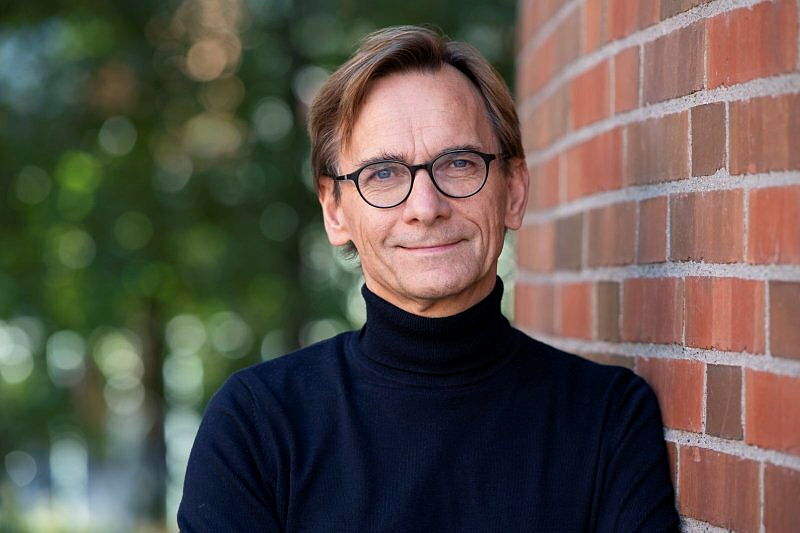
Christen Krogh is rector of OsloMet, the institution where Ahmed and Baugerud work, and where Fylkesnes was previously employed. In an email, he explains that OsloMet “encompasses work for diversity and against racism in many areas”.
“One example is the work we do to recruit young people with immigrant backgrounds to our programmes,” he writes.
He adds that diversity in the student body is one of the hallmarks of the university. OsloMet’s academic communities also contribute significant research on diversity, racism and discrimination, Krogh points out.
“One example is a project at the Norwegian Institute for Urban and Regional Research (NIBR), the purpose of which is to develop one or more methods for mapping experiences of racism and discrimination. Another example is a project at the Faculty of Social Sciences, which is working to foster multicultural young people’s interest and involvement in public debate.”
The rector also makes reference to internal activities. The university has, among other measures, improved its procedures for reporting harassment and discrimination. OsloMet also conducts training for managers, HR, safety delegates and employee representatives in the prevention and handling of harassment and discrimination.
“The university has common guidelines for students and employees. We are also involved in a sector collaboration to establish courses in diversity management. The work encompasses topics such as racism, inclusion, equitable recruitment, implicit biases, power and privilege as well as strategic diversity management, and will be piloted in 2026,” writes Krogh.
Translated by Totaltekst.
The research network Critical perspectives on Teacher Education (and Education) – CritTEd is an international network with participants from Norway, Finland, Iceland and Sweden, and is coordinated by Østfold University College.
Its members work on critical perspectives on education. Emphasis is given to social justice, racism, gender, language and decolonial approaches.
Sandra Fylkesnes, Ingrid Rorrick Beiler, Zahra Bayati and Erik Bergman from the network took the initiative for the special issue on race and racism in academia in the journal Reconceptualizing Educational Research Methodology. Beiler, Bayati and Berman were editors while Fylkesnes was only involved in the initial phase, due to parental leave.
- The term race denotes a social construct by which people are categorised. This kind of categorisation is similar to how we categorise many groups in society. For example, our categorisation of able-bodied and disabled people, women and men, is based on an underlying notion of an imagined ideal.
- Racism manifests in everyday practices that use race as a basis for categorisation, and is always connected to ideas about race. The racism of whiteness in Norway is about who is considered ‘fully Norwegian’ and how people are excluded because they do not fit unspoken ideas or ideals of Norwegian identity.
- Whiteness is not a fixed category, but something that changes depending on the context. It can also refer to an invisible structure of power and privilege that favours (not only, but mainly) white people – often without them even noticing.
- The racism of whiteness refers to the invisible, structural and cultural systems that make whiteness a (white) standard by which everything is measured and that give white people privileges, without there necessarily being overt prejudice or hatred (Leonardo, 2009; Delgado & Stefancic, 2017). Normalising whiteness and what is considered to be white may, as an indirect consequence, suppress other groups.
Source: Sandra Fylkesnes