
Humanities cutbacks hit women
More and more humanities fields are being discontinued at Norwegian universities. Many of them are popular with female students. Gerd Bjørhovde, chair of the KIF Committee, is worried about this trend.
More and more humanities fields are being discontinued at Norwegian universities. Many of them are popular with female students. Gerd Bjørhovde, chair of the KIF Committee, is worried about this trend.
For generations it was usually the men who became doctors, psychologists and dentists. Now it is different. Today there are so few men applying to professional studies in medicine, psychology and dentistry that the University of Oslo is considering giving them preferential treatment.
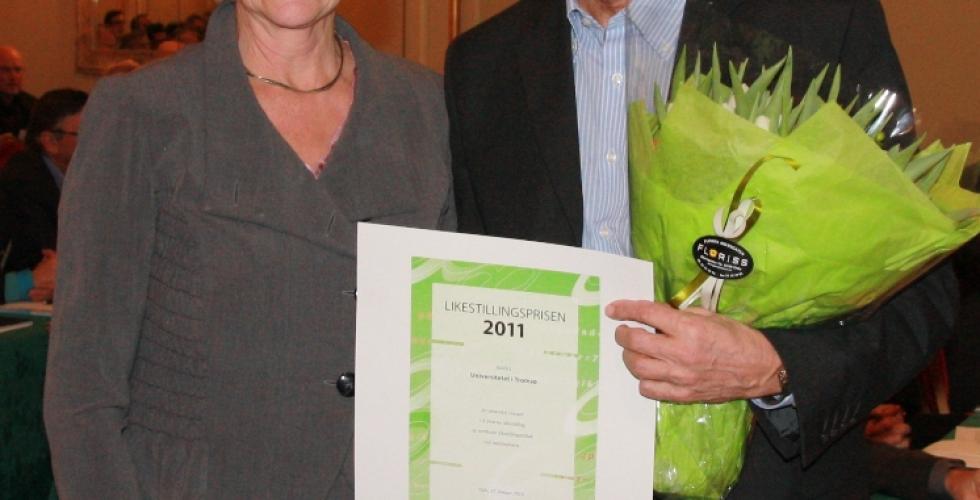
The recipient of the Gender Equality Award for 2011 is the University of Tromsø, which according to the jury is one of the key players in the field of gender equality. “It is very gratifying to have been selected for this award,” says Rector Jarle Aarbakke.
Earmarked funding for gender equality measures will no longer be available when the new Centres of Excellence are established.
According to the science hierarchy, sociology has low status whereas mathematics has high status. Both this hierarchy and the peer-review process have characteristics that structurally downgrade women’s position in academia.
It pays to be keenly aware of how you use your time. This is according to Siv Ellen Kraft, a recently appointed professor at the University of Tromsø.
The Norwegian Theatre Academy at Østfold University College is now writing its first plan against racism. "Although this is new in Norway, I hope that the rest of the university college and more academic institutions will follow suit," says Thomas Prestø.
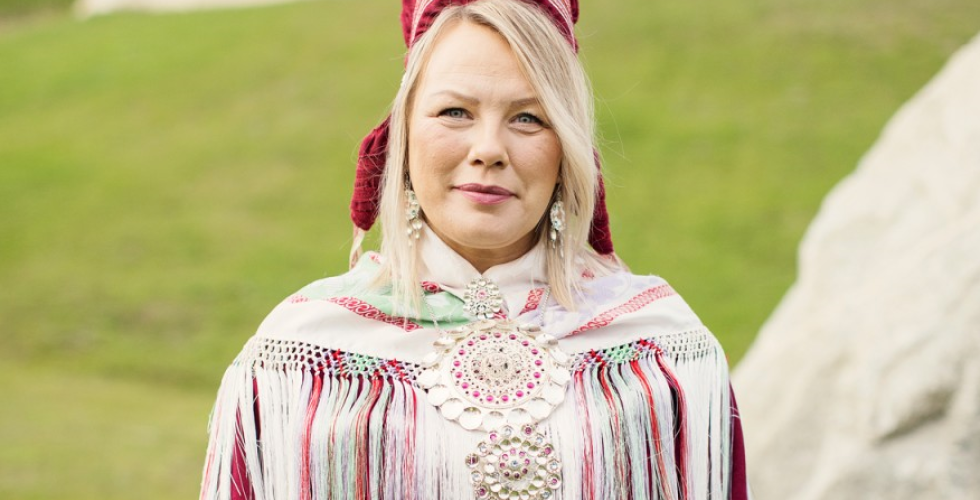
Sámi University of Applied Sciences is the main supplier of Sámi-speaking teachers to schools in Finland, Norway, Sweden and Russia. The majority are women, but an increasing number of men are also applying, according to Rector Laila Susanne Vars.
The laws and policies of many European countries include different grounds for discrimination. "Yet intersectional perspectives in research policy are still at an early stage," says Heidi Holt Zachariassen, co-author of a recent report.
The lives of researchers changed dramatically during the lockdown, and in several different ways, according to head of research Espen Solberg.
Measures to include marginalised groups are often controversial, because they are not adequately justified, according to associate professor Melina Duarte.
“Social background affects whether you take higher education, what you study, the grades you get, and whether or not you finish your education. But little is known about how social class affects academic careers,” says researcher Thea Strømme.
How can we work intersectionally? We could, for example, investigate where male and female students with an immigrant background end up in their education," says professor Yvonne Benschop.
Some people still shake their heads at the concept of diversity management. After all, isn’t it just about treating all employees equally?